
Christine van Ruymbeke
Renaissance Florence and Timurid Herat: Contemporary Receptors, Transformers and Disseminators of an Arabo-Persian Literary Chess Game
2026-2027 (November - December)
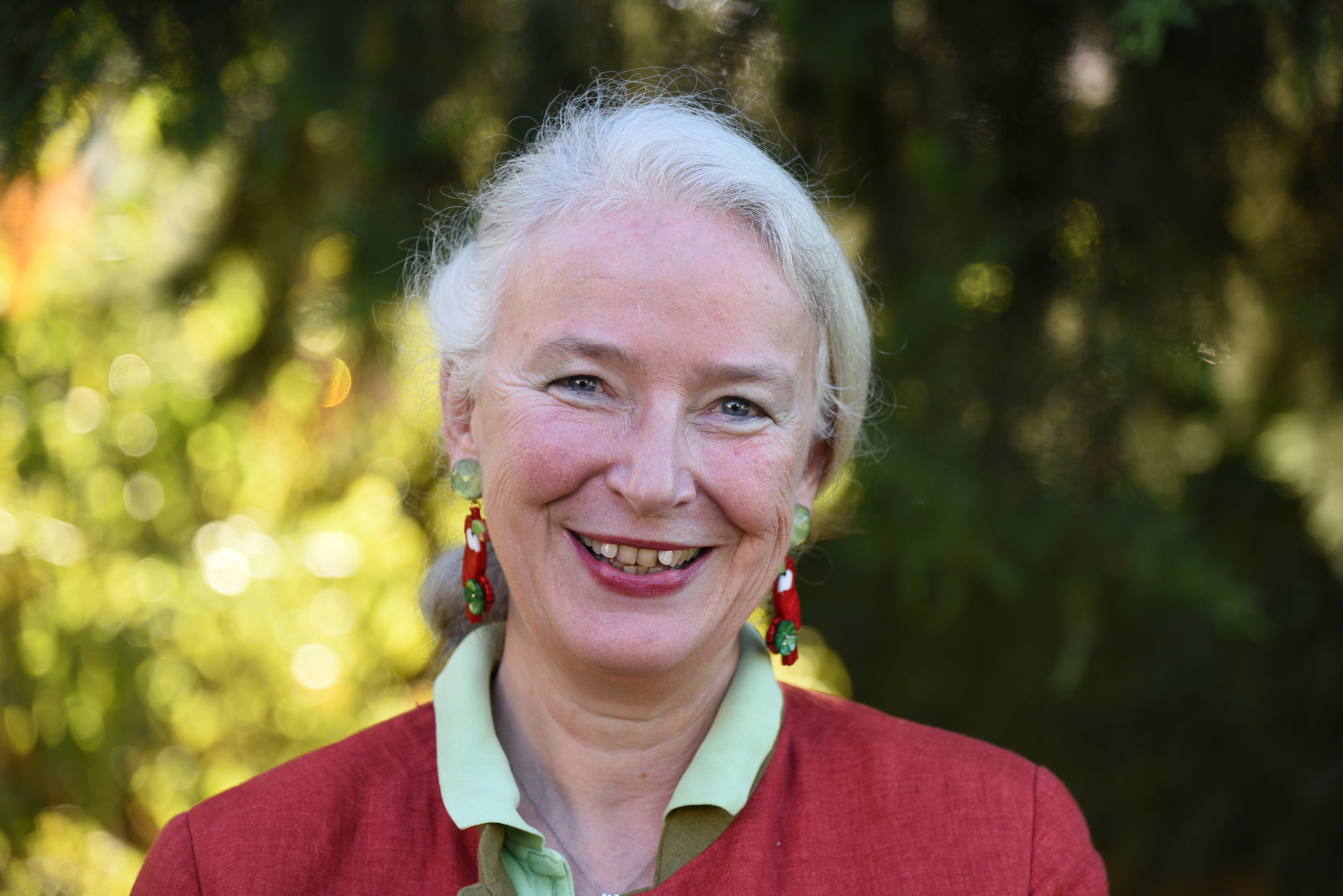
Biography
Christine van Ruymbeke (Universite Libre de Bruxelles, Ph.D) is Ali Reza and Muhamed Soudavar Professor of Persian Literature and Culture at the University of Cambridge (UK). She teaches Persian Literature in the original Persian, at Undergraduate, Masters and PhD levels. She was co-Chair of the Faculty of Asian and Middle Eastern Studies and Head of its Middle Eastern Department untill Oct 2025.
Christine is a literary critic working and publishing on classical (medieval and pre-modern) Persian literature, with a special focus on its medieval non-mystical narrative production. How can we engage today with these classical Persian texts in a meaningful way? She has authored, curated and edited 11 volumes and over 45 articles and essays. Her forthcoming monograph analyses Haft Paykar (Seven Images), composed by the poet Nezami of Ganja: a complex twelfth-century poetic narrative about story-telling and its psychological healing effect.
Project Summary
In Venice in 1552, the polygraph Anton Francesco Doni (d. 1574) published La Filosofia Morale del Doni (Venice, 1552) composed in Florentine Italian vernacular. His sources were a Spanish translation of the Latin translation of the Hebrew translation of the eighth-century Arabic Book of Kalila and Dimna done a few years earlier and the Latin translation itself. In Persianate Central Asia, at the Herat court of Sultan Hosayn Bayqara (d. 1506, a great-grand-son of the conqueror Timur), a rewriting of the Book of Kalila and Dimna, titled Anvar-e Sohayli (The Lights of Canopus) (ca. late 1490s) gained extraordinary status in the region. It was adapted at the court of the Moghul Akbar (d. 1605) and translated in Ottoman Turkish at the court of Soliman the Legislator (d. 1566). At a 50-years interval, Herat and Florence experienced similar “Renaissance” periods, characterised by a ruling elite’s wealth and vision to revivify knowledge and thought, a willingness to experience and welcome external knowledge, a desire to challenge stale intellectual traditions. This research project considers the literary and psychological tools available to the Christian and Muslim “Renaissance” authors to reveal the text’s value to new readerships. During her 2025 stay at I Tatti, Prof van Ruymbeke familiarised herself with Doni’s text. She will now identify the aims of this rewriting and the tools used to express them. The comparison with the Timurid rewriting will spotlight the nuances in interpretation and understanding by two rich cultural traditions, of the redoubtable wisdom nestling in the original text’s narrative.