
Andreas Staier
Reflections on Musical Time: Time Structures, Densities, Emptiness
2025-2026 (January-February)
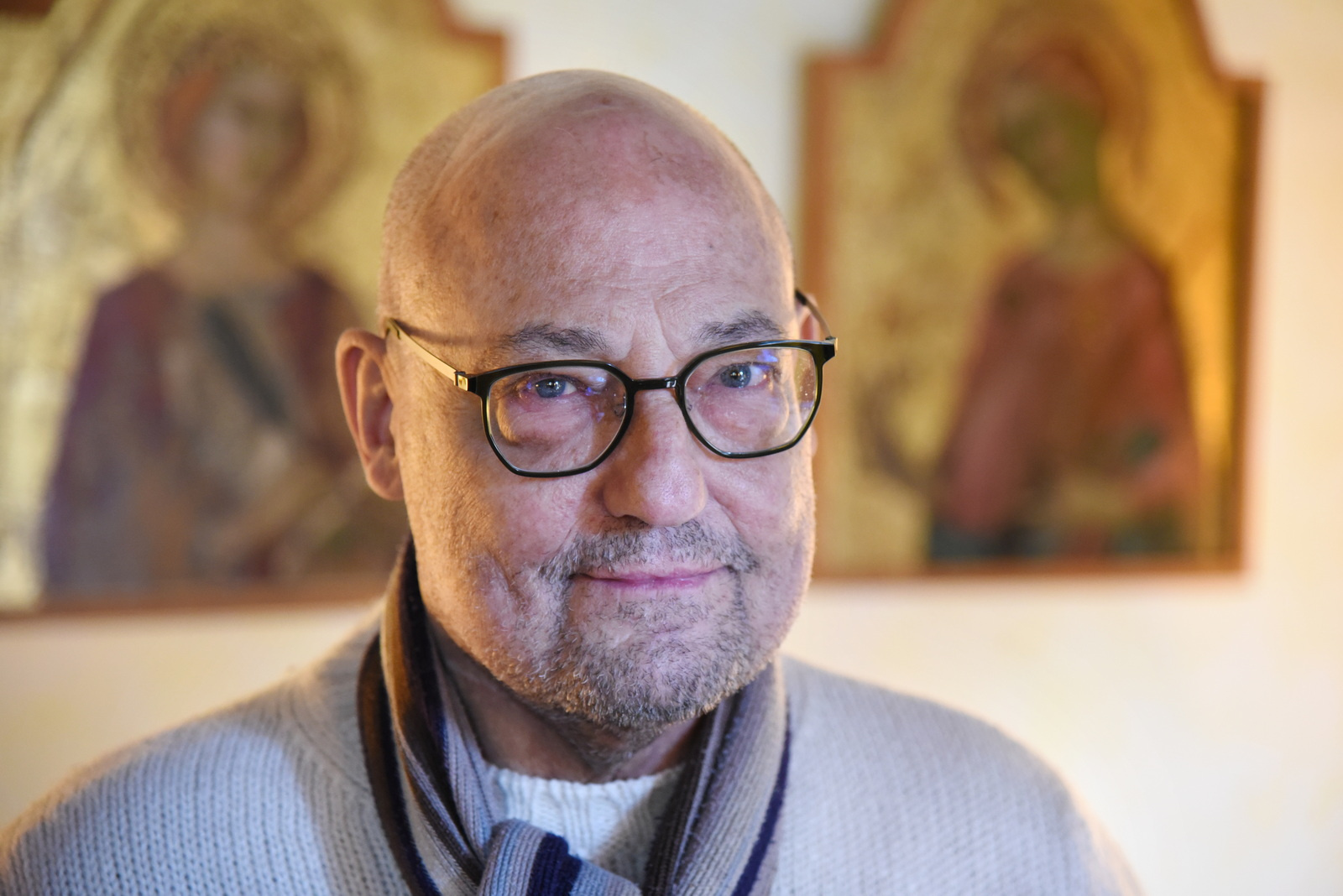
Biography
Andreas Staier has dedicated his artistic career to the study of historic keyboard instruments. He has performed as a soloist in many of the most prestigious concert venues worldwide, and collaborated with prominent colleagues in orchestral and chamber music formations. A large number of recordings, by now surely more than 60, bears witness of the wide range of his repertoire. His special focus, and love, is dedicated to three composers whose works have accompanied him for many years by now: William Byrd, Johann Sebastian Bach and Franz Schubert. More recently, his interest has also been in composition. An opus of six pieces for harpsichord – Anklänge– was published in January 2023.
Project Summary
Andreas Staier has spent some time as a performing musician and as a composer, exploring melancholy. Of the four temperaments, melancholy is related the most closely to time, or decaying time. It is therefore obvious that melancholy is also the musical temperament par excellence. Thinking about it in specifically musical terms brings with it a consideration of time structures in many different senses. In the text books on analysis of music from the last four centuries, however, much more attention was being given to the harmonic and motivic structural layers, or rhetorical gestures, of compositions than to the treatment and development of musical time; more interest was taken in the musical events that happen within time than to musical time itself, as the dimension which enables something to happen. Speed of events is not the same as speed of tempo. Slow metronomic speed can go together with a high density of content. Fast notes “on the surface“ of an ostinato would not necessarily contradict an underlying slow pulse. This makes the interpretation of tempo indications given by composers sometimes so difficult. Staier will scrutinize the time characteristics of some works which in this aspect seem particularly remarkable, such as those by William Byrd, Franz Schubert, Anton Webern and Morton Feldman.