
Lachlan Hughes
The Eyes of the Mind: Francesco degli Organi and the Florentine Ars Nova
2026-2027
Biography
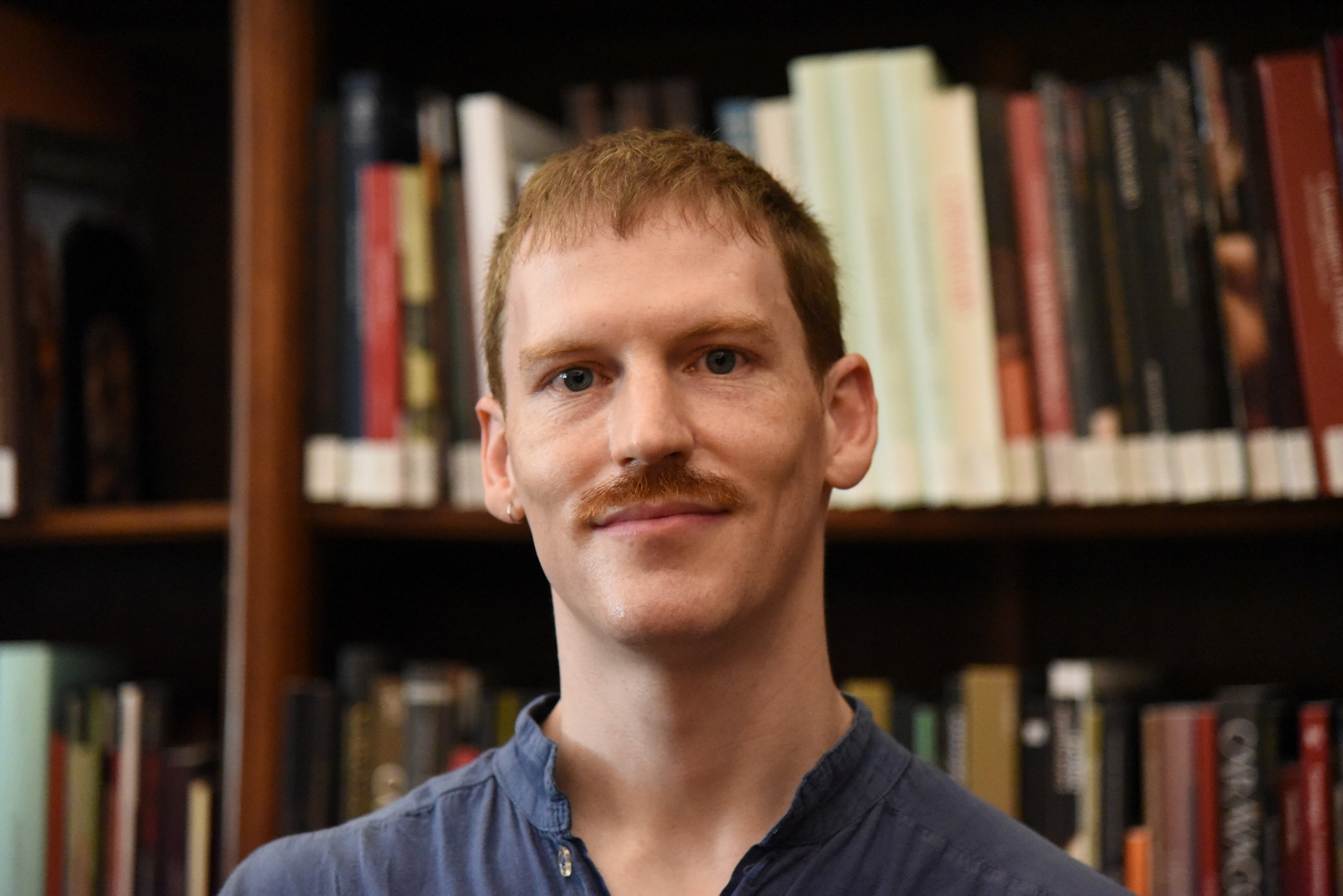
Lachlan Hughes is a scholar of medieval Italian music and literature. He received his DPhil from Oxford and has held teaching positions in Oxford, Durham, and Cambridge, where he is currently a Junior Research Fellow at Trinity College and an affiliated lecturer in the Faculty of Modern and Medieval Languages and Linguistics. His first book, forthcoming with OUP, explores Dante’s relationship to a range of contemporary Florentine song traditions. His work has appeared in Annali d’Italianistica and Modern Language Review, and he is co-editor, with Helena Phillips-Robins, of Literary Devotions in Late Medieval and Early Modern Italy, forthcoming with Legenda Press.
Project Summary
In the final decades of the fourteenth century, Florentine literary culture was marked by tensions between medieval romance traditions and renewed engagement with classical antiquity, particularly in debates surrounding the ethical functions of literature. Despite its prominence in the cultural life of the city, vernacular song has played only a marginal role in scholarly accounts of the period. This project addresses this gap by turning to the works and reception of the blind poet-composer Francesco degli Organi (d. 1397; a.k.a. “Landini”) — praised by his contemporaries as an astounding polymath — as a point of entry into this neglected terrain. Although Francesco is a central figure of the Italian ars nova (musical settings of Italian, French, and Latin poetry from the fourteenth and early fifteenth centuries), his works have rarely been read in relation to the wider intellectual and cultural concerns of his time. Bringing together literary, musicological, and historical approaches, this project combines close analysis of his songs with a study of his early reception. In doing so, it shows how vernacular song participated in and helped shape the cultural transformations that would come to define Renaissance humanism of the early fifteenth century; at the same time, it also traces the emergence of the “composer” as a new form of artistic identity, crystallised in the figure of Francesco himself.