
Raffaele Marrone
“Colgli occhi e collo core”: Laude and Images in Late Medieval Tuscany (13th–15th Centuries)
2026-2027
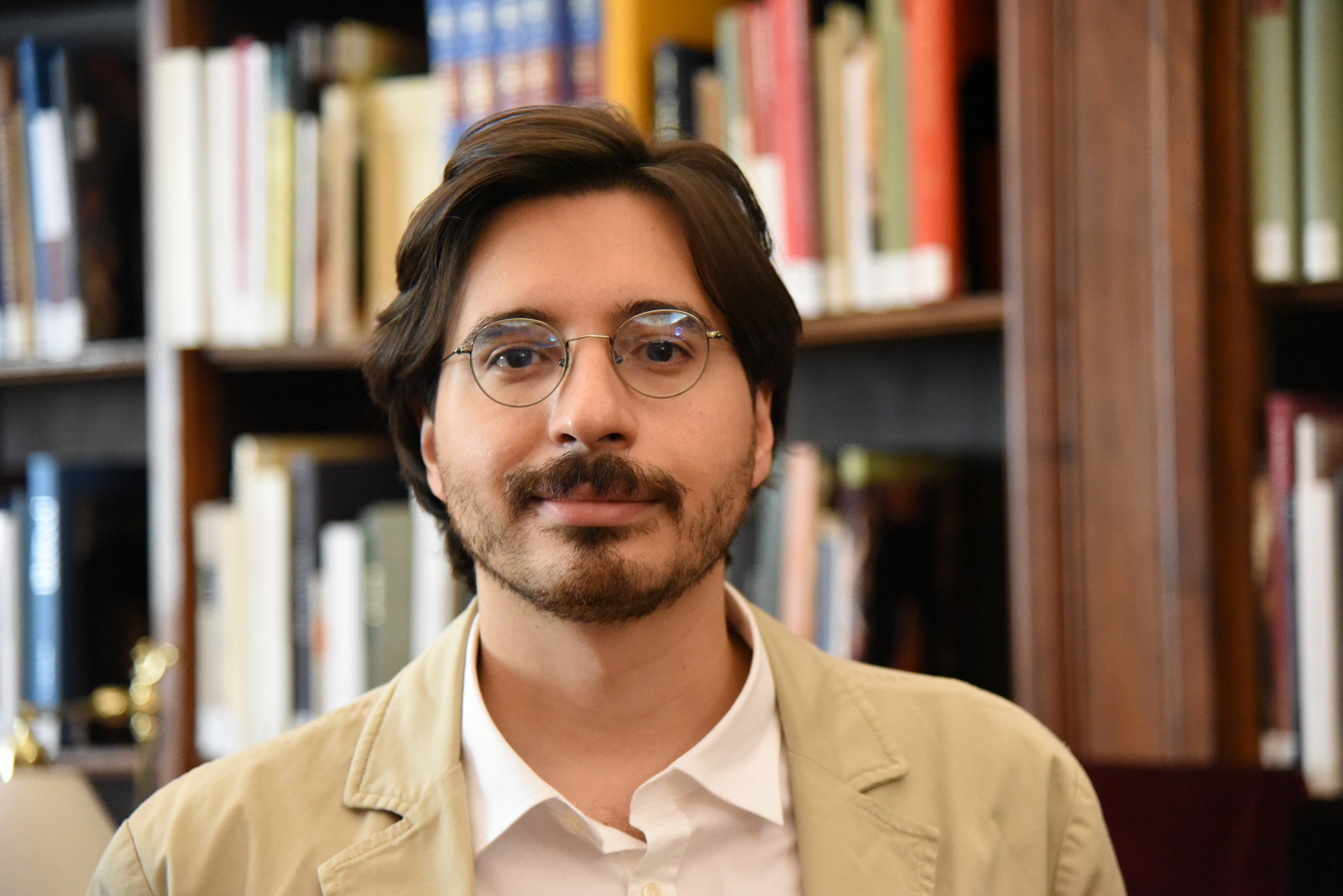
Biography
Raffaele Marrone studies Medieval Art History, with particular focus on issues related to artistic patronage of confraternities in central Italy during the Late Middle Ages. He graduated from the Università degli Studi di Siena, and received his PhD from the Scuola Normale Superiore in Pisa, with a dissertation on images, spaces, and devotional practices of Sienese confraternities between the 13th and 14th centuries. He has authored numerous publications in Italian and international venues, many of which explore the interplay between artworks and textual sources. A monograph derived from his doctoral research is forthcoming (Firenze University Press–USiena Press, 2026).
Project Summary
Research on the relationship between images and the production of sacred vernacular chants—the laude—has so far largely followed the path of identifying thematic exchanges between texts and visual representations. This project aims to develop a different line of inquiry, examining the interaction between images and laude within the context of confraternal worship rituals, with a focus on late medieval Tuscany (13th-15th centuries). Starting from an analysis of normative texts and the repertoire of songs, the research aims to demonstrate the centrality of visual experience in confraternal devotion: both by highlighting indications of the use of visual supports contained in confraternal regulations and by identifying visual references within the laude themselves. Through the combination of textual and material evidence, the study seeks to reconstruct the visual environment of ceremonies that included a musical element, and thereby to achieve a diachronic understanding of the different forms of reciprocal communication between images and laude, taking into account the ceremonial contexts in which the chants were performed, local specificities, and the different ‘types’ of brotherhoods. In this way, alongside the evolution of devotional practices, the research traces a transformation in the role of imagery within confraternal rites: from simple visual counterparts to ‘active’ elements integrated into a complex multimedia system.